Thursday, December 25th, 2025
Ebru Marbling Workshop Brings Ottoman Islamic Art to Life

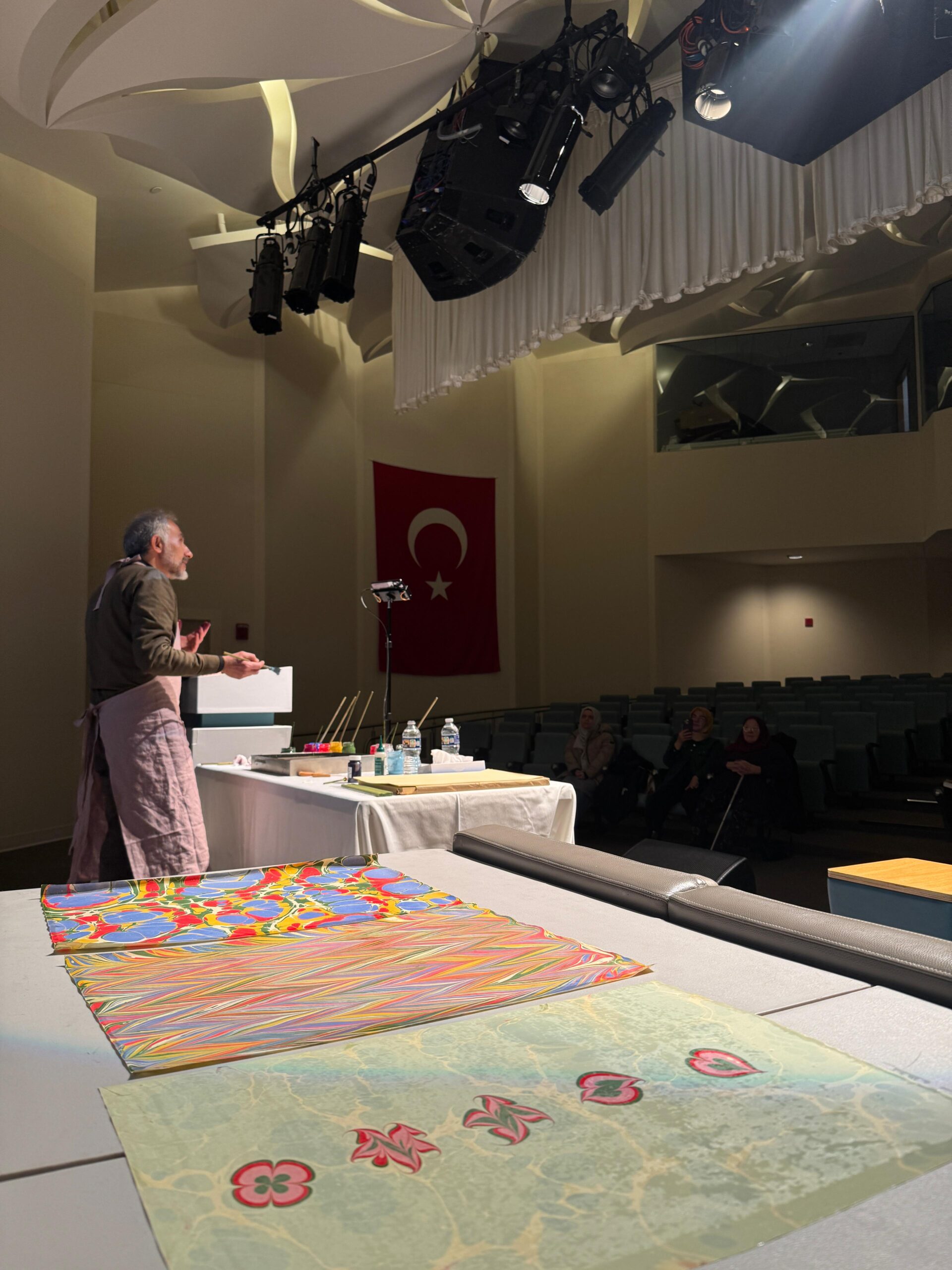
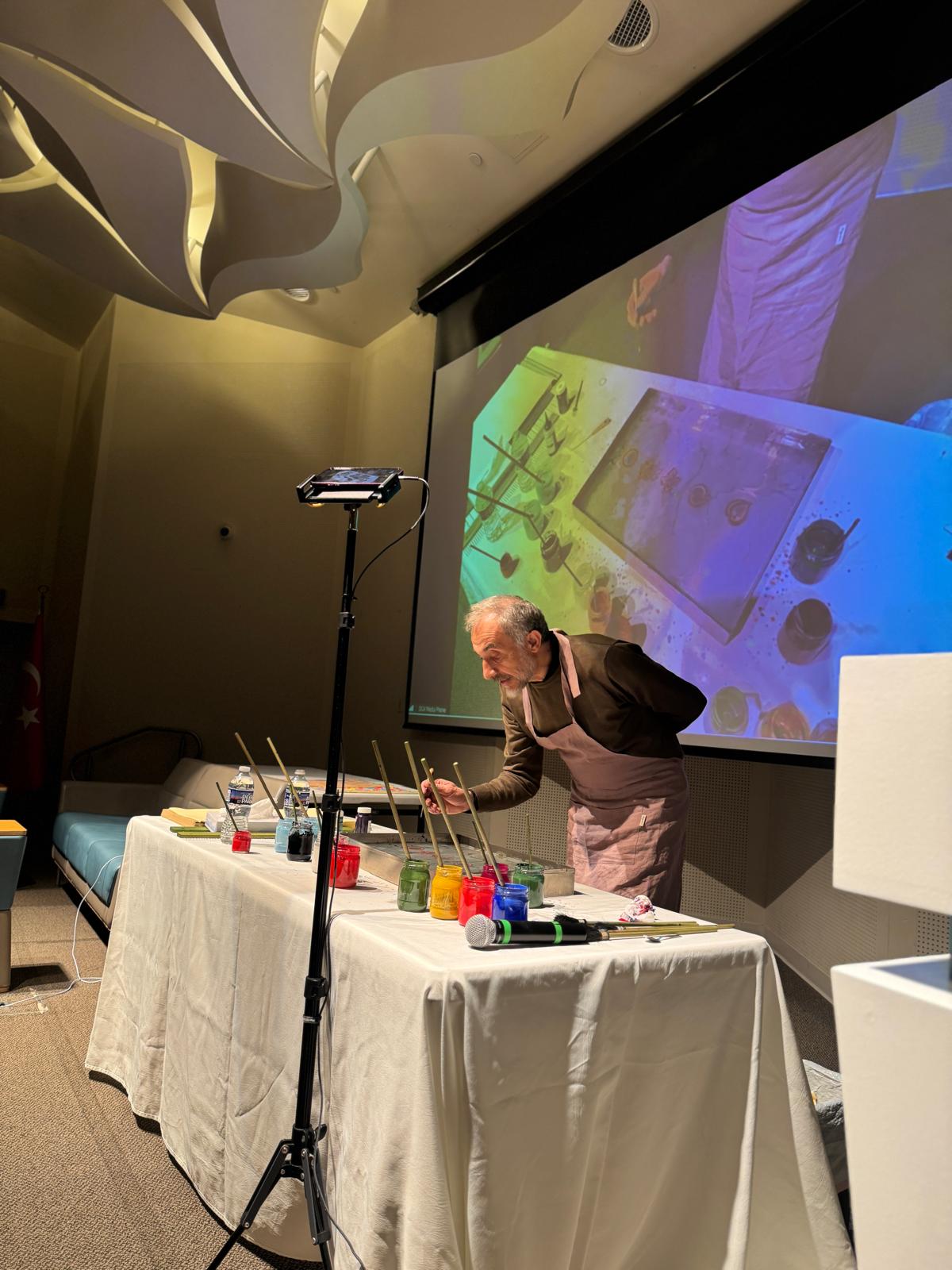
Ebru Marbling Workshop Brings Ottoman Islamic Art to Life at the Diyanet Center of America
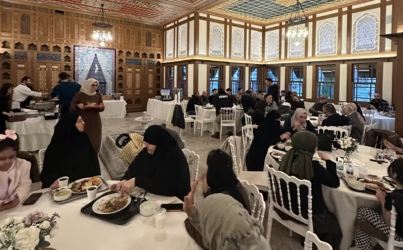
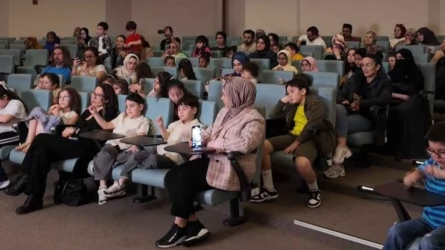
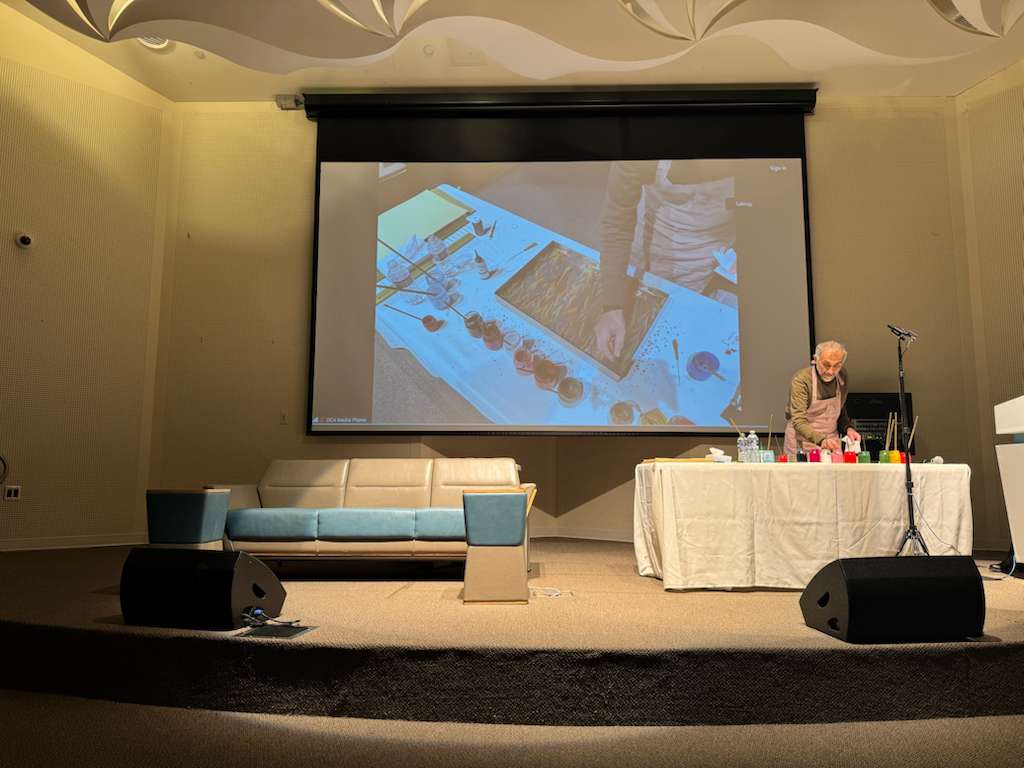
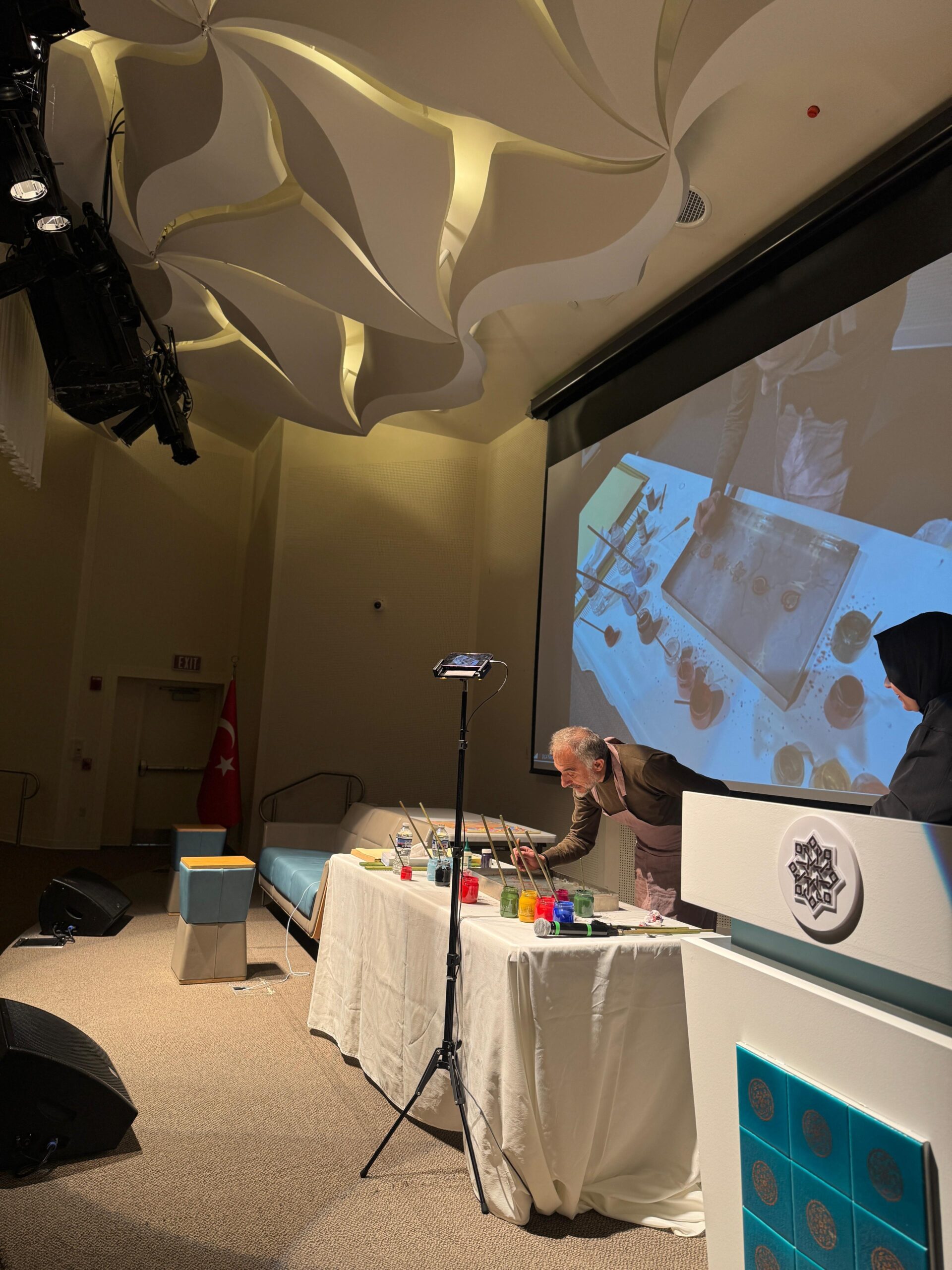
The Diyanet Center of America (DCA) hosted a Traditional Ebru Marbling Workshop on Sunday, December 21, 2025, bringing together community members to engage directly with one of the classical art forms of Islamic and Ottoman civilization.
Ebru, the traditional Turkish art of paper marbling, is recognized by UNESCO as an Intangible Cultural Heritage of Humanity. Rooted in centuries-old Islamic aesthetics, Ebru reflects harmony, patience, and contemplation.
Exploring the Art of Ebru
The workshop was led by Professor Dr. Hicabi Gülgen from Bursa Uludağ University, a specialist in Turkish-Islamic art. During the session, participants were introduced to the materials and techniques of Ebru, as well as its historical development, motifs, and stylistic features.
Dr. Gülgen also explained the symbolic meanings behind common patterns and discussed how Ebru has been practiced from the Ottoman period to contemporary times, highlighting its enduring cultural and artistic significance.
Hands-On Learning for All Ages
Participants of all ages—including children, youth, adults, and elderly community members—took part in the workshop. Each participant had the opportunity to practice Ebru individually, create their own marbling designs under expert guidance, and take their completed works home at the end of the session.
"Programs like this play a vital role in preserving Islamic artistic traditions while making them accessible to future generations."
Preserving Tradition Through Engagement
The Chairman, Assoc. Prof. Dr. Fatih Kanca, also attended the workshop and emphasized the importance of such programs in sustaining Islamic artistic traditions. He noted that through initiatives like the Ebru workshop, DCA continues its commitment to supporting and promoting Islamic arts and aesthetics while providing meaningful, hands-on learning opportunities for the wider community.
Events of this kind aim to preserve traditional art forms and make them accessible to new generations in a practical and engaging way, ensuring that these timeless expressions of Islamic culture remain vibrant and relevant.